
Passing the Business Down Without Breaking the Family: 3 Decisions Every Family Business Must Make
Oct 29, 2026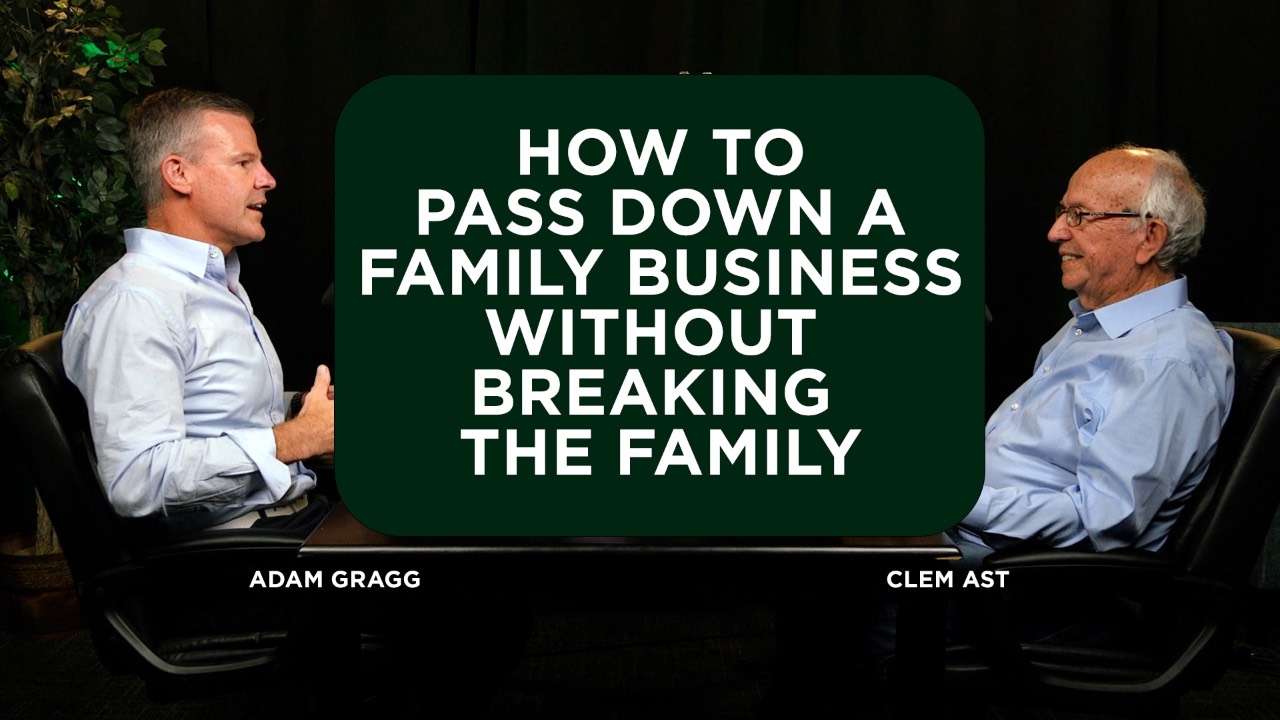
Have you ever noticed that the hardest conversations in a family business aren't about the business?
Who's going to run it when Dad steps back? Is it fair? Does my sister think I got the better deal?
Nobody says it out loud, so it shows up somewhere else: in tense meetings, in decisions that never get made, and at the Thanksgiving table. What's unspoken at the dinner table shows up in the boardroom.
A family business can outlive its founder, or it can split the family apart. The difference is usually decided long before the handoff. In Episode 205 of the Decide Your Legacy Podcast, I sat down with Clem Ast, who has advised family businesses since 1977, to talk about what makes a handoff healthy.
The Family Business Is a Tree
Our conversation was built around a simple picture from Nate Hamilton's article The Enterprising Family Tree (Lansberg Gersick Advisors). A family enterprise is like a tree:
- The roots are the family: its values, stories, faith and traditions.
- The trunk is ownership: who owns what and who decides what.
- The canopy is the business: where the visible growth happens.
Most of a tree is underground. Most of what decides a handoff is too.
As a family therapist, I see this every day. The business is part of the family system. Family roles follow people into the office: the oldest, the peacemaker, the one who never felt approved of. And even if you don't run a family business, this applies to you. Every team acts like a family, and sibling rivalry looks a lot like department rivalry.
A family doesn't drift into a healthy handoff. They decide it. Here are the three decisions.
3 Decisions Every Family Business Must Make
1. Tend the Roots (Family)
Unresolved conflict and unspoken expectations rot the roots out of sight. Resentment and jealousy are the conversations families avoid most when it comes to who takes over.
When the next generation doesn't get a voice, they find another way to get your attention: distancing, acting out, or even cutting off. And when a business disagreement turns into an overreaction or a blowup, it's often an old family wound wearing a business suit.
A place to start:
Hold a family meeting this month, and bring in someone neutral to help navigate the strong emotions and potential conflict. As the leader, go first. Own it if you have not let as you could. Try something like: "I haven't led the way I want to. I've learned some things, and I want this to be a place where everyone can share their concerns and feel heard." Then build in structured time for these conversations. You may be misunderstanding each other, and things shift when you start to understand.
2. Strengthen the Trunk (Ownership)
"We'll figure it out when the time comes" is one of the most dangerous sentences in a family business. It's the elephant in the room. When nobody talks about it, people fill in the blanks with the worst case scenario. Bring out the elephant and the tension goes down.
Owning the business, working in the business, and leading the business are three different things. Families get stuck when those roles blur together.
A place to start:
Write it down clearly: who the owners are, what their intentions are, what the organizational structure looks like, and how decisions get made. A visual helps everyone see it. Create a family constitution or charter before the founder steps back, and set clear guidelines for family members who own part of the business but don't work in it.
And if you're avoiding bringing in an outside advisor or board, be honest about why. We often say we don't want to hurt someone's feelings, but usually it's our own feelings we're protecting.
3. Hunt the Termites (Business)
Termites are the hidden problems that eat away at the business while it still looks healthy from the outside. The ones I see most often are pride, comparison, and silence.
It's tempting to treat symptoms like pay, turnover, or process because they feel safer than dealing with hurt, mistrust, and fear. But fixing the symptom while the real problem sits between family members won't create real progress.
Non-family employees notice more than owners think. When family members get away with things others would be fired for, like not working as hard, blowing up, or mistreating teammates, everyone sees it, and morale takes a hit.
A place to start:
To keep the business open to change, dream together. One of my favorite things to do is guide family and non-family leaders through an activity I call The Time Machine, where we imagine the future of the business together. It builds real excitement, and it often brings out the hidden issues that would keep everyone from getting there. That’s where the breakthroughs happen. I’ve seen businesses make major changes because of it.
Ask questions and get curious about the real source. Be honest with yourself: am I showing favoritism that isn't based on merit? Leadership starts with self-leadership: regulating your emotions, keeping your commitments, communicating well, and taking feedback. If a family member can't do that yet, the owner has to own it, either developing them into the role or putting someone qualified in it.
In Review
- Tend the Roots: have the hard family conversations early.
- Strengthen the Trunk: put ownership and decision-making in writing before you need it.
- Hunt the Termites: look past the symptoms to the real source.
A tree without healthy roots can't stand the test of time. Neither can a family business. The legacy isn't the business you hand down. It's the family that's still standing when you do.
How Decide Your Legacy Can Help
Family Business Coaching
A Decide Your Legacy coach can facilitate the courageous conversations your family has been avoiding and help you build a clear plan for ownership, leadership, and succession.
Leadership Team Coaching
Bring family and non-family leaders together to build trust, clarify roles, and dream about the future of your business.
Schedule a 30-minute call with Adam
Related Content
The Enterprising Family Tree: Nurturing Your Roots for Lasting Growth (article) by Nate Hamilton, Lansberg Gersick Advisors
50 Fun Relationship-Building Questions (post) by Adam Gragg
47 Chat Starters for Going Deeper in Relationships (post) by Adam Gragg