How to Be Emotionally Healthy: 4 Emotional Health Tools
Jul 24, 2026
I’m a middle child from a loud and emotionally expressive Italian family. Growing up, almost everyone seemed comfortable expressing what they felt.
Except me.
I decided early on to hide my emotions and live inside my head. I thought that was safer. It was not.
I have used unhealthy ways to cope with stress and emotion. For me, that has included alcohol, nicotine, caffeine, worry, isolation, and staying distracted.
I also have a tendency to go to extremes. I can get consumed by whatever has my attention at the time, whether that's a relationship, my health, work, money, parenting, politics, and much more.
But there's hope. The healthier you become emotionally, the better your life gets. I know that from research, but I also know it from personal experience.
I also talk through why emotional health matters and how to stop stuffing what you feel in this episode of the Decide Your Legacy podcast:
But there’s hope! The healthier you become emotionally, the better your life gets. I know this from research and personal experience.
The Damage of Stuffing Your Emotions
- You miss out on experiencing the full range of emotions—joy, excitement, and true connection.
- You end up feeling lonely, believing no one really understands what you’re going through.
- You get stuck in cycles of anxiety and depression.
- You lose touch with who you really are, making it harder to find direction in life.
- Others struggle to trust you because you come across as guarded or distant.
- Your relationships remain surface-level instead of growing in depth and authenticity.
- You become uncomfortable with other people’s emotions and, as a result, push them away.
4 Tools for Becoming Emotionally Healthy
Tool #1. Identify How You Feel
Twice each day, write what emotions you’ve experienced recently. Then answer 3 questions about each feeling.
1. What am I feeling? Write down the feeling, positive or negative.
2. Why am I feeling this way, or what happened that caused this feeling?
3. What am I learning about myself from this emotion?
Example: “I feel sad because I’ve been thinking about a loss in my life. I’m learning that I need to talk with someone I trust instead of carrying it alone.”
Tool #2. Communicate How You Feel
Express some of these feelings with friends, family, or co-workers. This can be done verbally or in writing (text, email, card, etc.). You can share your answers to the above questions. It might feel awkward at first, but if your motive is simply to be open and healthier emotionally, that will get you past the fear. Don't let how you think others might respond to your openness keep you from sharing.
“Vulnerability sounds like truth and feels like courage.”
— Brené Brown
One huge benefit to being emotionally open is that people will view you as safer because you’re no longer a mystery.
Being open emotionally improves your leadership capacity, as well. According to Daniel Goleman, the author of Emotional Intelligence, emotionally smart people have 5 traits that make them better leaders.
Daniel Goleman’s 5 Traits of Emotionally Intelligent People
- Self-awareness — They recognize what they feel and understand how their emotions affect their thoughts, choices, and relationships.
- Self-regulation — They manage their emotions instead of letting emotions control their reactions.
- Motivation — They are driven by purpose, growth, and internal values, not just outside approval or rewards.
- Empathy — They notice and consider what others may be feeling before they respond.
- Social skills — They build trust, communicate clearly, handle conflict, and strengthen relationships.
You might say, “I’ve been feeling anxious today, and I’m trying not to hide it.” Or, “I felt hurt when that happened, and I want to talk about it instead of pulling away.”
One of the biggest traps is believing that thinking about your emotions is the same as actually feeling, naming, and sharing them.
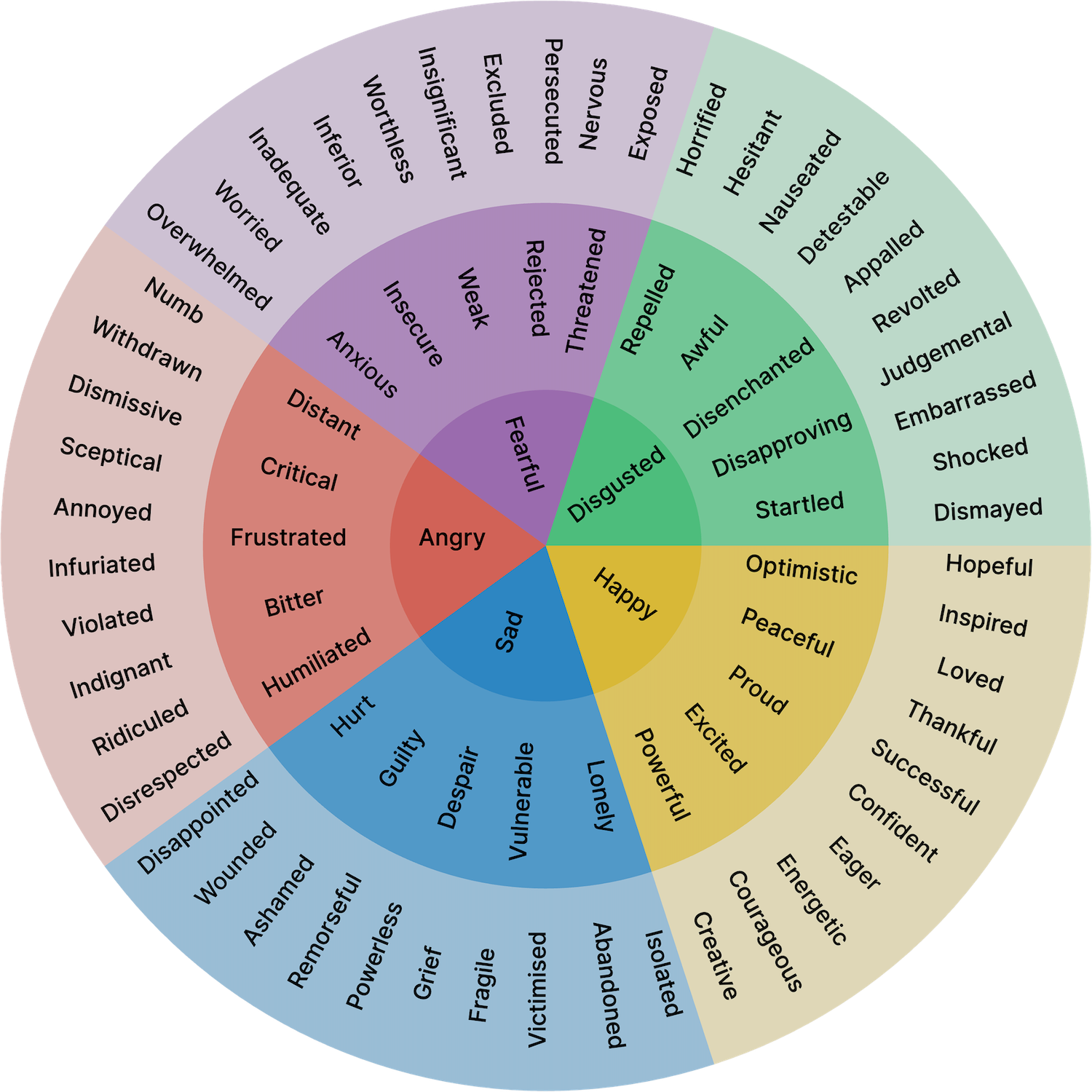
Tool #3. Increase Your Feelings Vocabulary
Identify feelings you notice in yourself and in others. Expand your emotional vocabulary by studying the definitions of different emotions. The feelings wheel below is a great resource.
Tool #4. Chart Your Emotional Experiences
For any given period of time, identify the frequency with which you’ve felt and expressed specific emotions. You may discover you rarely talk about certain feelings. Practice sharing (verbally and non-verbally) of those emotions you rarely express.
Download the 40 Common Emotions & Their Definitions PDF
Naming what you feel is one of the first steps toward becoming emotionally healthy. This simple resource includes 40 common emotions with clear definitions to help you better understand what is happening inside you.
Use it for personal reflection, journaling, coaching conversations, or anytime you need help putting words to your emotional experience.
Increasing your emotional intelligence takes practice. Engage in one of the above exercises each day.
Do not try to become emotionally healthy in theory. Pick one feeling today, name it honestly, and share it with someone safe.
Take the next step.
Becoming emotionally healthy takes courage. It means identifying what you feel, telling the truth about what is happening inside you, and taking action instead of numbing, avoiding, or staying stuck in your head.
Shatterproof Yourself Lite includes a section specifically on understanding and sharing your emotions. In 7 small steps, you’ll learn how to reduce anxiety, build confidence, face fear, and take courageous action in your life and relationships.
Related Content
What to Do When Emotionally Overwhelmed (post) by Adam Gragg
Take Risks Frequently (post) by Adam Gragg
30 Happiness Building Actions (post) by Adam Gragg
Why You Must Face Your Past (post) by Adam Gragg